


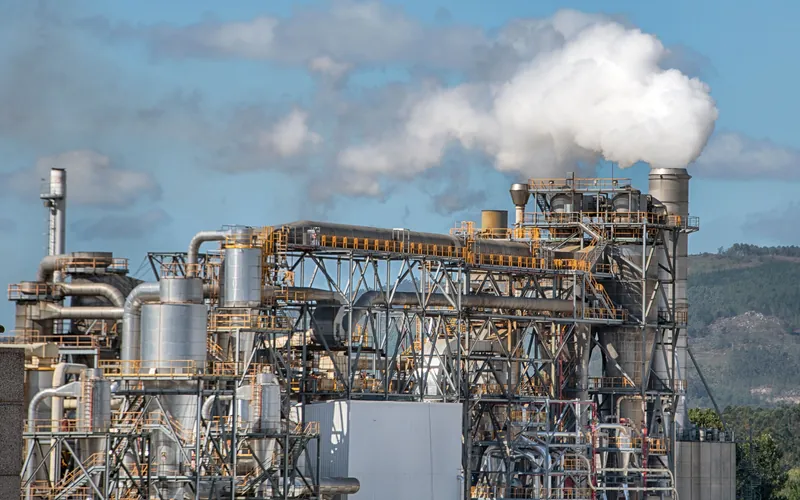
Air and Wastewater Emission Facility Installation Permit and Report in Korea
To install a facility that discharges air pollutants or wastewater at a factory or similar site in Korea, you must obtain an installation permit or file an installation report under the Clean Air Conservation Act and the Water Environment Conservation Act. Facilities that discharge specified hazardous substances or are installed in special countermeasure areas, among others, need a permit; other facilities need a report. For a wastewater discharge facility installation report, you are notified whether it is accepted within 10 days.
Last updated
Licensing serviceShort answer
An air emission facility installation report (대기배출시설 설치신고) is the procedure a business files with the si/do governor under the Clean Air Conservation Act (대기환경보전법) before installing a facility that discharges air pollutants; facilities that discharge wastewater need a separate permit or report under the Water Environment Conservation Act (물환경보전법). Facilities that discharge specified hazardous substances above the threshold or are installed in special countermeasure areas and similar locations need a permit, and other facilities need a report. The processing period on the form is 10 days for air, and notice of acceptance of a wastewater discharge facility installation report is given within 10 days (60 days on the form for zero-discharge wastewater facilities). YouSun Administrative Agency prepares and files the installation permit application or installation report and the attachments on your behalf.
Air emission facility installation report agent in Korea — services handled by YouSun Administrative Agency
- Preparing and filing the air pollutant emission facility installation permit application or installation report (대기오염물질 배출시설 설치허가신청서·설치신고서)
- Preparing and filing the wastewater discharge facility installation permit application or installation report (폐수배출시설 설치허가신청서·설치신고서)
- Pre-review of whether a permit or a report applies (separately for air and wastewater)
- Pre-review of whether the site is in an installation restriction area or special countermeasure area
- Organizing application entries and attachments, such as raw material and fuel consumption and product output
- Compiling the submission file with the emission forecast and pollution control facility (방지시설) specifications prepared by the control facility contractor
- Preparing and filing the start-of-operation report (가동개시·가동시작 신고서)
- Preparing and filing the change permit application or change report (변경허가·변경신고서)
- Handling supplement requests on the permit or report
Who typically engages us
- Factories adding processes that release air pollutants, such as painting, printing or metalworking
- Manufacturers planning to run processes that generate wastewater, such as cleaning or plating
- Sites that need a change permit or change report for emission facilities after a plant expansion
- Foreign-invested companies building production facilities in Korea
- Sites with both air and wastewater facilities that want to handle the procedures under both laws together
Emission facility installation permit and report at a glance
- Who needs it
- Anyone installing an air pollutant emission facility (Clean Air Conservation Act) or a wastewater discharge facility (Water Environment Conservation Act)
- Requirements
- Air: pollutants can be treated to within the permissible emission standards, and no violation of installation restrictions under other laws / Wastewater: the same, plus separation and collection facilities, control facilities for solid waste, and blocking and retention facilities for zero-discharge wastewater facilities / Installation is restricted upstream of water source protection areas, in special countermeasure areas and similar locations
- Process
- Map out air and wastewater facilities and determine permit or report → prepare documents → file the installation permit application or installation report → receive the permit or report certificate → install the facilities → file the start-of-operation report and begin operation
- Documents
- Air: installation permit application or installation report, statement of raw material and fuel consumption, product output and forecast pollutant emissions, specifications of emission facilities and air pollution control facilities, general drawing of control facilities, annual maintenance plan for control facilities / Wastewater: installation permit application or installation report, location map of the discharge facilities and wastewater process flow chart, statement of raw material (including water) use, product output and water pollutants, control facility specifications and drawings (a layout plan may substitute for drawings in a report)
- Timeline
- Air emission facility installation permit or report: 10 days per the form / wastewater discharge facility installation report: notice of acceptance within 10 days (5 days for a change report), zero-discharge wastewater facilities: 60 days per the form / time to install control facilities is separate
Common situations
Pick the question closest to your case: each one gives the conclusion first, then what changes it, the documents involved and the expected timeline.
We are adding new equipment to our factory in Korea. How do we tell whether it needs an emission facility installation permit or just a report?
Short answer Air and wastewater are assessed separately. For air, facilities that release specified hazardous air pollutants above the threshold or are installed in a special countermeasure area need a permit, and others need a report. For wastewater, facilities that release specified hazardous water pollutants above the threshold or are installed in a special countermeasure area, installation restriction area, water source protection area or similar location need a permit, and others need a report.
- The facility releases only air pollutants Determine permit or report under the Clean Air Conservation Act and apply to the si/do governor.
- The facility releases only wastewater Determine permit or report under the Water Environment Conservation Act and submit the wastewater discharge facility documents.
- There are both air and wastewater facilities Follow the procedure under each law separately.
- Documents
- Equipment list, raw material and fuel consumption and product output data, site location information
- Timeline
- 10 days per the form for air, notice of acceptance within 10 days for a wastewater discharge facility installation report / in practice, time to determine the category and prepare documents is added
What documents do I need for an air emission facility installation report to install a paint booth in Korea?
Short answer Submit the emission facility installation report to the si/do governor with the statement of raw material and fuel consumption, product output and forecast pollutant emissions, the specifications of the emission facilities and air pollution control facilities, the general drawing of the control facilities, and the annual maintenance plan for the control facilities.
- Specified hazardous air pollutants are not released above the threshold and the site is not in a special countermeasure area Proceed with an installation report.
- Specified hazardous air pollutants are released above the threshold, or the site is in a special countermeasure area File an installation permit application with the same attachments.
- Documents
- Emission facility installation report (or installation permit application), emission forecast statement, specifications of emission facilities and air pollution control facilities, general drawing of control facilities, annual maintenance plan for control facilities
- Timeline
- 10 days per the application form / time to install control facilities is separate
Our cleaning process produces wastewater. How do we file a wastewater discharge facility installation report in Korea?
Short answer Under the Water Environment Conservation Act, submit the wastewater discharge facility installation report with the location map of the discharge facilities and the wastewater process flow chart, the statement of raw material (including water) use, product output and water pollutants, and the control facility specifications and drawings. For a report, a layout plan may substitute for the drawings.
- Specified hazardous water pollutants are not released above the threshold and the site is not in a restricted area Proceed with an installation report; you are notified within 10 days whether it is accepted.
- Specified hazardous water pollutants are released above the threshold, or the facility is installed in a water source protection area or similar location Review it as a facility requiring a wastewater discharge facility installation permit.
- Documents
- Wastewater discharge facility installation report, location map of discharge facilities, wastewater process flow chart, statement of raw material (including water) use, product output and water pollutants, control facility specifications and layout plan
- Timeline
- Notice of acceptance within 10 days; if no notice is given within that period, the report is deemed accepted on the day after the period ends
How long does an air emission facility installation report take in Korea, and is it different for wastewater?
Short answer An air emission facility installation permit or report has a processing period of 10 days on the application form. For a wastewater discharge facility installation report, you are notified whether it is accepted within 10 days (5 days for a change report), and zero-discharge wastewater facilities have 60 days on the form.
- No notice is given within the period for a wastewater discharge facility installation report The report is deemed accepted on the day after the period ends.
- Design and construction of the control facilities are still pending Schedule the installation time separately from the permit or report processing period.
- Documents
- Installation permit application or installation report and attachments for air and wastewater respectively
- Timeline
- Air: 10 days per the form / wastewater report: 10 days (5 days for changes), zero-discharge wastewater facilities: 60 days / in practice, supplement periods may be added
What should we prepare to estimate the cost of an emission facility installation permit in Korea?
Short answer Permit and report fees must be checked separately with the competent authority, and most of the actual burden comes from technical preparation such as designing and building the control facilities and calculating emissions. Start by mapping out the air and wastewater facilities and determining permit or report, which narrows the range of documents needed.
- The facility is confirmed as subject to a report Prepare mainly the report form and attachments; for a wastewater report, a layout plan may substitute for drawings.
- The facility is subject to a permit Also prepare materials showing the permit standards are met (treatment to within the permissible emission standards, no violation of installation restrictions).
- Documents
- Equipment list, raw material and fuel consumption, product output, control facility specifications
- Timeline
- 10 days per the form for air, notice of acceptance within 10 days for a wastewater report / time to install control facilities is separate
Our factory is upstream of a water source protection area in Korea. Can we install a wastewater discharge facility?
Short answer In installation restriction areas such as upstream of water source protection areas and special countermeasure areas, installation is restricted in principle. Where specified hazardous water pollutants are released, there is an exception allowing installation as a zero-discharge wastewater facility.
- You can use a zero-discharge structure that does not release wastewater into public waters Consider a permit for a zero-discharge wastewater facility with separation and collection facilities, control facilities for solid waste, and blocking and retention facilities.
- You want to install a facility with a normal discharge structure This falls under the installation restriction, so first consider changing the location or the process.
- Documents
- Site location information, wastewater process flow chart, control facility specifications and drawings
- Timeline
- 60 days per the form for zero-discharge wastewater facilities / in practice, facility design time is added
We received an emission facility installation permit in Korea. Can we start operating as soon as installation is finished?
Short answer No. Once the emission facilities and control facilities are installed, you must file a start-of-operation report (가동개시 신고 for air, 가동시작 신고 for wastewater) before operating.
- It is an air emission facility File the start-of-operation report with the permitting or reporting authority before operating.
- It is a wastewater discharge facility File the start-of-operation report before operating, and file a change report if the reported start date changes.
- Documents
- Start-of-operation report, permit or report certificate
- Timeline
- Must be reported in advance, before operation
If we expand factory equipment in Korea, do we need a new emission facility change permit, or is a change report enough?
Short answer It depends on the scale of the expansion. For air, expanding by 50/100 or more of the total permitted or reported capacity (30/100 or more for facilities with specified hazardous air pollutants) or adding a use requires a change permit. For wastewater, a change permit is required if discharge increases by 50/100 or more over the permitted level (30/100 for facilities with specified hazardous water pollutants) or by 700 cubic meters or more per day. Other changes require a change report.
- The expansion meets or exceeds the change permit threshold Apply for a change permit with the installation permit attached.
- The expansion is below the threshold Submit a change report (for wastewater, notice of acceptance of a change report within 5 days).
- Documents
- Change permit application or change report, installation permit (for a change permit), details of the expansion and emission data
- Timeline
- Notice of acceptance of a wastewater change report within 5 days / change permits depend on the authority's review and any supplement requests
We are operating without reporting our emission facilities in Korea. What penalties could we face?
Short answer For air emission facilities, installing or operating without a permit may lead to imprisonment of up to 7 years or a fine of up to KRW 100 million, and without a report, imprisonment of up to 5 years or a fine of up to KRW 50 million. For wastewater discharge facilities, operating without a permit may lead to imprisonment of up to 7 years or a fine of up to KRW 70 million, and without a report, imprisonment of up to 5 years or a fine of up to KRW 50 million.
- The facility is subject to a report Prepare the installation report and attachments for air or wastewater and start the report procedure right away.
- The facility is subject to a permit Show whether pollutants can be treated to within the permissible emission standards and apply for an installation permit.
- Documents
- Installation permit application or installation report, emission forecast and water pollutant data, control facility specifications
- Timeline
- 10 days per the form for air, notice of acceptance within 10 days for a wastewater report
If we hire an administrative agent for an air emission facility installation report in Korea, what do they handle?
Short answer Once engaged by you, YouSun Administrative Agency prepares the installation permit application or installation report and attachments, reviews requirements such as permit-or-report classification, handles submission to the authority and supplement requests, and prepares start-of-operation and change reports. We do not design or build control facilities, calculate emissions, measure pollutants or perform environmental technician duties, and the competent authority decides whether to accept the filing.
- Design materials from the control facility contractor are available We take those materials, align the application and attachments, and submit them.
- You are still before the design stage We first review the air and wastewater classification and any location restrictions.
- Documents
- Equipment list, raw material and fuel consumption, product output, design materials from the control facility contractor
- Timeline
- 10 days per the form for air, notice of acceptance within 10 days for a wastewater report / in practice, depends on the time to prepare design materials
Summary
- Scope: air pollutant emission facilities (Clean Air Conservation Act) and wastewater discharge facilities (Water Environment Conservation Act).
- Permit: facilities discharging specified hazardous substances at or above the threshold, facilities installed in special countermeasure areas, etc. / Report: all other facilities.
- Documents: installation permit application or installation report, plus a statement of projected emissions, a specification of the prevention facilities, and more.
- Fees: confirm permit and report fees with the competent authority.
- Processing: 10 days on the form (60 days for zero-discharge wastewater facilities).
Is installing an emission facility subject to a permit or a report?
It depends on the type of facility and where it is installed. For air pollutant emission facilities, facilities that generate specified hazardous air pollutants at or above the threshold and facilities installed in special countermeasure areas (with some exceptions) need a permit, and other emission facilities need an installation report. For wastewater discharge facilities, facilities that discharge specified hazardous water pollutants at or above the threshold and facilities installed in special countermeasure areas, installation restriction areas, water-source protection areas and the like need a permit, and other facilities need a report. If a site has both air and wastewater facilities, each must go through the procedure under its own law.
What are the requirements for an emission facility permit or report?
(1) Permit standards (air): the pollutants discharged must be treatable to the permissible emission standards or below, and the facility must not violate installation restrictions under other laws.
(2) Permit standards (wastewater): the pollutants must be treatable to the permissible discharge standards or below and the facility must not violate installation restrictions under other laws; a zero-discharge wastewater facility must also have separation and collection facilities, prevention facilities that treat pollutants as solid waste, and blocking and retention facilities so that wastewater does not flow or leak into public waters.
(3) Installation restrictions: installation may be restricted in areas upstream of water-source protection areas, special countermeasure areas and similar areas.
(4) Report before operation: after installing the emission and prevention facilities, you must file a start-of-operation report in advance before operating them.
Which documents are needed for an emission facility permit or report?
Air: attach to the emission facility installation permit application or installation report a statement of raw material and fuel consumption, product output and projected pollutant emissions; a specification of the emission facilities and air pollution prevention facilities; general drawings of the prevention facilities; and an annual maintenance plan for the prevention facilities. Wastewater: attach to the wastewater discharge facility installation permit application or installation report a location map of the facilities and a wastewater discharge process flow chart; a statement of raw material (including water) use, product output and expected water pollutants; and a specification and drawings of the prevention facilities (for a report, a layout plan may replace the drawings). For a change permit, the installation permit is also attached.
What is the procedure for an emission facility permit or report?
(1) Check the configuration of emission and prevention facilities and whether a permit or a report applies → (2) prepare documents (including emission projections and prevention facility design) → (3) submit the installation permit application or installation report → (4) receive the permit or report certificate → (5) install the facilities → (6) file the start-of-operation report, then operate. Designing and building prevention facilities and calculating emissions are the domain of specialist firms, and our office does not do this work for you.
How long does an emission facility permit or report take?
On the application form, the processing period for an air emission facility installation permit or report is 10 days. The Enforcement Rule of the Water Environment Conservation Act sets the period for notifying acceptance of a wastewater discharge facility installation report at 10 days (5 days for a change report), and the form shows 60 days for zero-discharge wastewater facilities. If acceptance is not notified within the set period, the report is deemed accepted on the day after the period ends. Time for installing prevention facilities is separate.
Which authority receives an emission facility permit or report?
Under the law, air emission facilities are permitted by or reported to the si/do governor (the Minister of Climate, Energy and Environment for facilities installed by a si/do and similar cases), and wastewater discharge facilities are permitted by or reported to the Minister of Climate, Energy and Environment. Check the actual filing office and delegation arrangements with the environment department of the si/do where the site is located or the river basin or regional environmental office.
What is the statutory fee for an emission facility permit or report?
Confirm the emission facility installation permit and report fees with the competent authority.
Why is an emission facility permit or report returned or supplementation requested?
Typical reasons confirmed in the law are a risk of exceeding the permissible emission standards, violating installation restrictions under other laws, a site in an installation restriction area, and an inadequate plan for installing prevention facilities. Installing or operating an air emission facility without a permit can lead to imprisonment of up to 7 years or a fine of up to KRW 100 million, and doing so without a report can lead to imprisonment of up to 5 years or a fine of up to KRW 50 million. For wastewater discharge facilities, operating without a permit can lead to imprisonment of up to 7 years or a fine of up to KRW 70 million, and without a report to imprisonment of up to 5 years or a fine of up to KRW 50 million.
What can an administrative agent help with?
YouSun Administrative Agency prepares the installation permit application or installation report and attachments, reviews the requirements, and submits them to the authority on your authorization. Designing and building prevention facilities, measuring pollutants and the duties of environmental technicians belong to specialist firms and licensed professionals and are not handled. Work restricted by other laws cannot be handled, and litigation or court representation is outside the scope of an administrative agent and is not offered. Whether a permit is granted or a report accepted is decided by the competent authority.
Frequently Asked Questions
Q. Is an emission facility subject to a permit or a report?
A. Facilities that discharge specified hazardous substances at or above the threshold or are installed in special countermeasure areas and the like need a permit; other facilities need a report. The detailed criteria differ between the air and wastewater laws.
Q. How soon after filing is a report accepted?
A. For a wastewater discharge facility installation report, acceptance is notified within 10 days (5 days for a change report), and the processing period on the form for air emission facilities is also 10 days. If no notice is given within the period, the report is deemed accepted on the next day.
Q. Can I start operating right after receiving the permit?
A. No. After installing the facilities, you must file a start-of-operation report in advance before operating them.
Q. Do I need a new change permit if I expand the facility?
A. Important changes, such as an expansion of 50% or more (30% or more for facilities emitting specified hazardous air pollutants) of the total or cumulative scale of the permitted or reported emission facilities, require a change permit; other matters require a change report.
Q. Can an emission facility be built in an installation restriction area?
A. In installation restriction areas such as those upstream of water-source protection areas, installation is restricted in principle, but there is an exception allowing a facility that discharges specified hazardous water pollutants to be installed as a zero-discharge wastewater facility.
Q. Can conditions be attached to the permit?
A. Yes. The minimum conditions needed to protect residents' health or the surrounding environment (permit conditions) may be attached.
Q. What happens if I install or operate a facility without a report?
A. For an air emission facility, imprisonment of up to 5 years or a fine of up to KRW 50 million; for a wastewater discharge facility, also imprisonment of up to 5 years or a fine of up to KRW 50 million.
Emission facility installation permit and report: key terms explained
- Air pollutant emission facility (대기오염물질배출시설)
- Structures, machinery, equipment and other objects that emit air pollutants into the air, as specified by Ordinance of the Ministry of Climate, Energy and Environment (기후에너지환경부); they require a permit or report under the Clean Air Conservation Act.
- Wastewater discharge facility (폐수배출시설)
- Structures, machinery, equipment and other objects that discharge water pollutants, as specified by Ordinance of the Ministry of Climate, Energy and Environment; they require a permit or report under the Water Environment Conservation Act.
- Zero-discharge wastewater facility (폐수무방류배출시설)
- A wastewater discharge facility that does not release wastewater into public waters, for example by treating it on site with water pollution control facilities or reusing it in the same facility.
- Specified hazardous air pollutants and specified hazardous water pollutants (특정대기유해물질·특정수질유해물질)
- Substances designated by law because they may harm human health or the growth of plants and animals; facilities releasing them above the threshold require an installation permit rather than a report.
- Pollution control facility (방지시설)
- A facility that removes or reduces air or water pollutants from emission facilities; its specifications and drawings are attached to the permit or report documents.
- Start-of-operation report (가동개시 신고·가동시작 신고)
- A report filed in advance, after installing the emission and control facilities and before operating them; the Clean Air Conservation Act calls it 가동개시 신고 and the Water Environment Conservation Act calls it 가동시작 신고.
- Change permit and change report (변경허가·변경신고)
- The procedure requiring a change permit when a permitted or reported emission facility is expanded beyond a set scale or a use is added, and a change report for other changes.
- Permissible emission standards (배출허용기준)
- The limit on pollutants that may be released from an emission facility; an installation permit can be granted only if pollutants can be treated to within these standards.
Our office
YouSun Administrative Agency
YouSun Administrative Agency is a licensed administrative agent office (행정사사무소) on Toegye-ro in Jung-gu, Seoul. We prepare and file permit, registration and report applications with Korean government agencies on behalf of clients, in Korean, English, Chinese and Japanese.
- Address
- 3F Seongwoo Bldg, 324 Toegye-ro, Jung-gu, Seoul 04614, Korea
- Phone
- +82-2-325-8222
- Hours
- Mon–Fri 09:30–17:30 (KST), closed weekends and public holidays
- Languages
- Korean · English · Chinese · Japanese
Related Pages
Contact
YouSun Administrative Agency (+82-2-325-8222) supports document review and filing with the competent authority.